News
Spring 2026 Newsletter
23 March 2026
Welcome to the Spring 2026 edition of Europa Ciceroniana’s Newsletter!
Every few months, our team will update you on the latest developments regarding our project. Of course, we will also look forward to upcoming events. Do you wish to receive these updates in your personal mailbox? Sign up using this form. Your address will not be shared or used for other purposes.
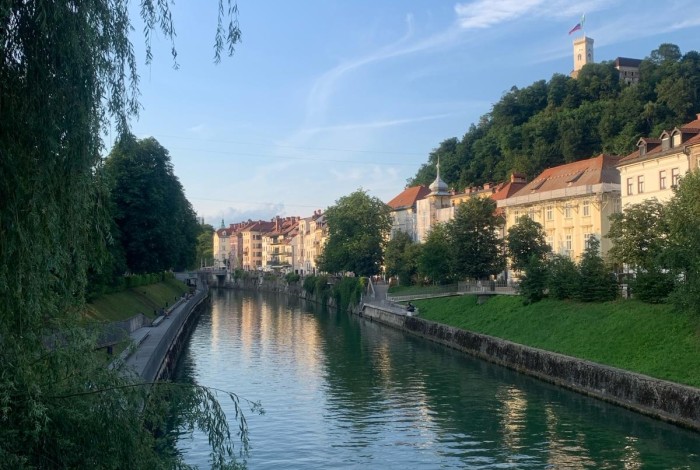
⏩🇸🇮 Looking ahead to the Ljubljana meeting
By Tjaša Šimunić and Rok Ribič
Preparations for the project meeting in Ljubljana are in full swing. Since early January, the Ljubljana team has been working non-stop to make sure our three-day conference will run smoothly and offer us plenty of time to gain new insights, present news and the latest findings, workshop and plan for the future, and, of course, meet in person as well as get to know the host institution and city. Ljubljana, a place continuously inhabited since prehistoric times, is anxiously awaiting its new guests.
Alongside workshops, we will listen to a wide variety of topics presented by Marko Marinčič, Katarzyna Marciniak, Beatrice Bersani, David Movrin, Charles Guérin, Rebecca Ferassa Urani, and others, covering all aspects of Cicero and Pro Archia, including its reception in later periods.
We will also visit the Ljubljana City Museum and the Emona Archaeological Park with the wonderful Bernarda Županek. The City Museum hides treasures of Ljubljana's long, rich history, and we will be able to see the way the Roman city of Emona still shapes the modern landscape.
The Ljubljana team eagerly awaits the arrival of all of the delegations and cannot wait to see the results of all of the project's hard work come to life.
Don't forget to check out the official programme of Ljubljana!
 A throw back to Cicero
By Elisa Della Calce and Beatrice Bersani
The Pro Archia has a way of bringing people together – and so it did with Elisa and Beatrice. Their paths first crossed in Turin, where Elisa was first a master’s student and then a PhD researcher while Beatrice was an undergraduate, before they met again as postdocs at Europa Ciceroniana.
Elisa joined the project in June 2025, but her connection with Cicero goes back a long way: his political thought has been at the centre of her interests since her days as a student. Since 2021, she has been exploring Cicero’s influence on Jesuit texts of the 16th–18th centuries, in China and the Far East, through her postdocs with the SERICA and Classica SERICA projects. Within Europa Ciceroniana, Elisa is now finding ways to combine traditional philological analysis with digital humanities, with a particular focus on NER (named-entity recognition).
Beatrice joined in September 2025, after finishing her PhD in Late Antique Latin poetry in Edinburgh. For her, the Pro Archia feels like a return home: this was one of the first texts she studied with Prof. Balbo. Now, after working as a classical tutor in a foreign university, its themes of citizenship, immigration and humanistic education also speak to her personal experience. Her work in the project focuses on the reception of the Pro Archia, and she has been digging through manuscripts and early printed books filled with commentaries, speeches, and teaching material on the text across Renaissance Europe.
Together, Elisa and Beatrice have been busy with the organisation of the Turin conference in September – they loved welcoming scholars and teachers from across Europe and experiencing the spirit of humanitas that animates the project. They now continue working on the coordination of the Italian commentary and look forward to sharing more updates soon – including a series of short interviews with teachers after the Ljubljana meeting!
🇳🇱 A new bond in the Dutch group
By Sophie van der Pot and Beatrice Buonomo
Salvete omnes! We are Beatrice and Sophie, two students of Classics: one studying in Rome, the other in Leiden. Europa Ciceroniana brought us together to work on the Dutch commentary, and we could not be more delighted!.jpg)
Sophie is in her third year of her bachelor’s degree and is involved with Cicero in various ways. She develops educational programs on his works—including the Pro Archia—for the Dutch National Museum of Antiquities, and she explores the reception of Cicero, among other contexts, in her thesis on Petrarch. Beatrice is a master’s student currently doing an Erasmus traineeship in Amsterdam. She travelled almost 1,300 km to immerse herself in Cicero—something that might seem surprising, since when she first started studying, she was not a big fan of this “narcisista con un enorme ego” (as her high school teacher used to say). Now that she is older, she not only appreciates his work but has come to love it—how could one not?
As Cicero stated: Etenim omnes artes quae ad humanitatem pertinent habent quoddam commune vinclum et quasi cognatione quadam inter se continentur. This sentence emphasizes the “familial” character of the relationship between the arts. During our collaboration, we have noticed that not only are the arts interconnected, but that art also has the power to connect people. We are a perfect example of this!
Although we approached the Latin language—and especially grammar—from different educational traditions, we discovered a common foundation beneath these differences: a shared fascination with literature and antiquity. We agree that the value of literature was not only significant in Cicero’s Rome, but is even more essential today. Humanitas connects, transforms, and even improves the world.
🇫🇷 A new entry in the French group
By Héloïse Bermond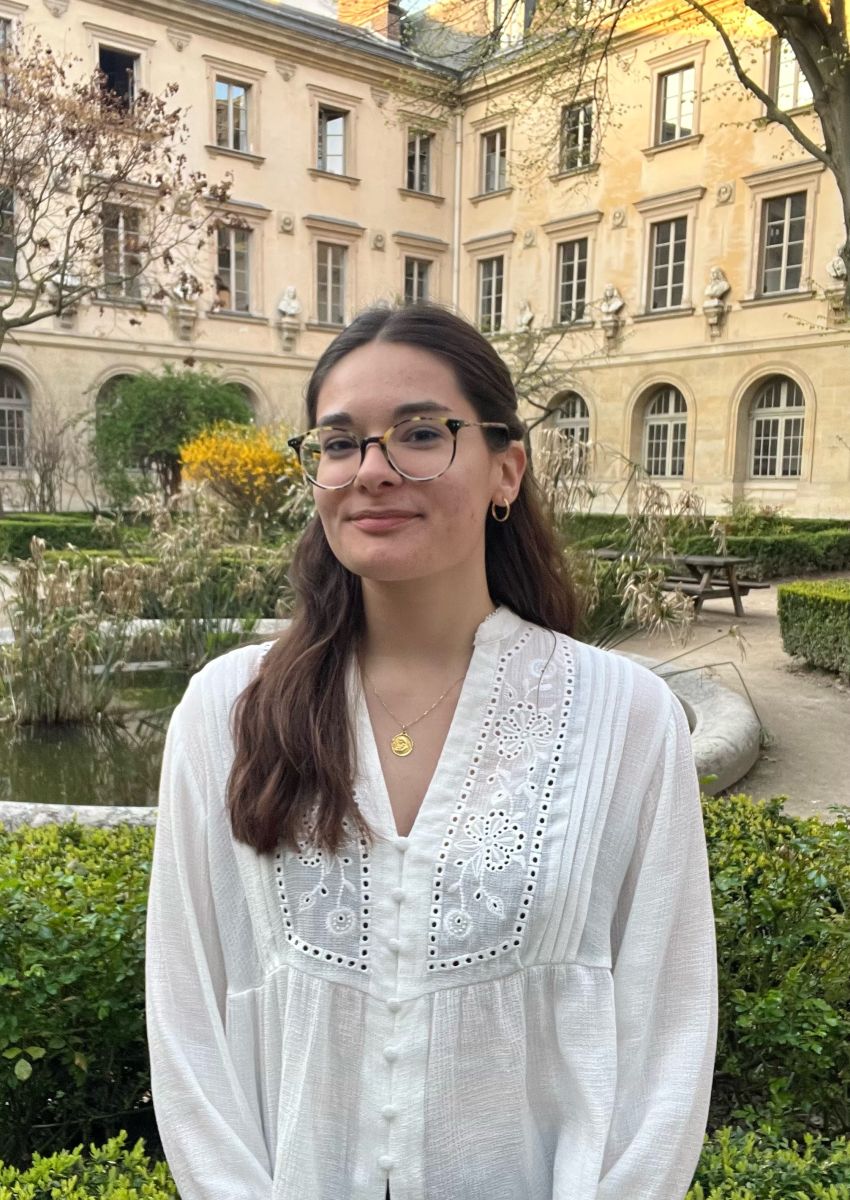
My name is Héloïse Bermond, I’m 21 years old, and I’m studying Classics at Sorbonne Université and at the École Normale Supérieure, in Paris. I first turned to Ciceronian rhetoric because I wanted to study Latin literature while also sustaining my special interest in Roman law and history. I really enjoy the fact that judiciary rhetoric allows us to explore how the legal framework can influence and shape the views of each member of a given society.
I am very glad to be joining the Europa Ciceroniana project as student-assistant to Pr. Charles Guérin, and to share those common interests with people all over Europe!