News
Summer 2026 Newsletter
5 July 2026
Welcome to the Summer 2026 edition of Europa Ciceroniana’s Newsletter!
Every few months, our team will update you on the latest developments regarding our project. Of course, we will also look forward to upcoming events. Do you wish to receive these updates in your personal mailbox? Sign up using this form. Your address will not be shared or used for other purposes.
In this Newsletter
- Looking ahead to our next meeting: Trier
- Looking back: the Ljubljana meeting
- High schools applications of the project
- A new entry in the German group
🇩🇪 Looking ahead to our next meeting: Trier
The next international meeting of the Europa Ciceroniana group will be at the University of Trier between 24 and 26 September 2026.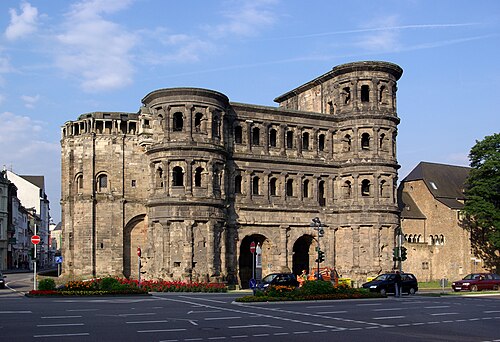
The theme of this meeting will be Didactic Actualization of Cicero's Pro Archia. There will be a few short lectures on the topic, with ample time to discuss your thoughts in international groups through many workshops, including a special workshop with Eleanor Dickey (University of Reading) about "Teaching Pro Archia two thousand years ago".
The programme will soon be published on the project website!
🇸🇮 A summery of the Ljubljana Conference
By Tjaša Šimunić
The conference of the Erasmus+ project on Cicero's speech Pro Archia, its reception, preparation of a new commentary in multiple European languages, and didactics of classics and history took place between the 26th and 28th of March 2026 at the Faculty of Arts, University of Ljubljana, Slovenia. The project is coordinated by Lidewij van Gils (University of Amsterdam), Andrea Balbo and Ermanno Malaspina (University of Turin), Stephan Busch (University of Trier), Charles Guérin (Sorbonne University), Christoph Pieper (Leiden University) and David Movrin (University of Ljubljana).
The speech in which Cicero defended Archias, a Greek poet living in Rome, against the threat of exile is one of the more unusual of Cicero's legal speeches, partly because it includes a paean to education and literature. An international team of researchers, professors, and students focused primarily on the problem of the reception and understanding of Cicero after Petrarch discovered the speech in 1333, a topic on which Marko Marinčič held his lecture. Katarzyna Marciniak presented her remarkable project on “Our Mythical Childhood.” Beatrice Barsini analyzed the speech’s reception during the Renaissance, a period of Humanism, which Christoph Pieper further enhanced in a workshop. Philippe Rousselot focused on later centuries with his lecture on ‘Cicero and his Enemies.’ David Movrin presented a series of lectures on the speech that was delivered by the Renaissance Humanist Lucas Agathopedius (or Lucas Guettenfelder, or Luka iz Dobrepolj) in the 16th century. Charles Guérin discussed the early modern Specimen eloquentiae exterioris ad orationem M. T. Ciceronis pro A. Licin. Archia accomodatum by Petrus Francius. Lidewij van Gils held a workshop on the experience of foreignness entitled Archias sum. Finally, Rebecca Ferrassa Urani presented her didactic experience with Cicero in Italian schools.
This was certainly not your everyday scientific conference. The workshops were specifically designed with all observers in mind, not just those participating in the project but also external visitors. Small groups were formed so that each included researchers, teachers, students, and other visitors, all participating equally. Teamwork was set up in an extremely dynamic fashion: the participants acted out parts of Pro Archia according to an Early Modern manual of gesticulation and movement or created an impromptu drama presentation on their experience of otherness.
The group focused specifically on the question of the commentary that would help modern students understand the text. The Dutch coordinators presented the intuitive website, offering many possibilities for using the group's findings in teaching Latin, Greek, history, and literature. Besides the quality of the program, the participants also emphasized good organization, the possibility of long-distance participation, and the program’s many opportunities to form informal contacts, along with interesting lectures and workshops. The tour of ancient Emona, presented by Bernarda Županek, was just one of the many activities that greatly enhanced the experience.
🇮🇹 Stage to the teachers
By Elisa Della Calce and Beatrice Bersani
During the Ljubljana meeting last March, we interviewed those who usually ask the questions: the teachers involved in the Italian section of the project.
Our interviewees are Tiziana Paracino, Rebecca Ferrassa Urani, and Luca Giancarli. Paracino and Ferrassa Urani work as an experienced-early-career duo at the Liceo Bellini in Novara. They tell us about the activities they carried out with their third-year class, including how they used Al to support the study of Pro Archia. Giancarli teaches a second-year class at the Liceo Classico 'Vittorio Emanuele II' in Jesi. Using the Pro Archia project, he invited students to discover grammatical concepts directly from the text instead of learning rules first and applying them later.
How did your involvement in this project improve teaching and learning?
According to Ferrassa Urani and Paracino, Al-based activities centred on Pro Archia helped students see Latin as more accessible. Under their supervision, students asked ChatGPT, Claude, and Copilot questions inspired by the text and by their own interests as young people today. They also created a short Al-assisted theatrical adaptation of Pro Archia and performed it in class: "They discovered that Latin is much more relatable than they had imagined."
Giancarli's students began to see grammar in a different light: "Grammar was no longer a set of abstract rules to memorise, but something that emerged directly from Cicero's words. It became more meaningful."
The teachers also observed stronger relationships with their students. Group-work activities encouraged participation and gave students more opportunities to express their creativity. Paracino and Ferrassa Urani's class was particularly enthusiastic about working towards a shared goal with their teachers: "Every time we attend an international meeting, they are eager to hear updates on the class's digital platform!"
What did students enjoy the most, and what did they find challenging?
For Giancarli's students, the theme of Pro Archia offered a welcome alternative to the political speeches they usually study.
Paracino and Ferrassa Urani report that students were especially interested in Roman citizenship laws: "It sparked sparked reactions and debate. They were shocked that Archias could not produce the documents proving his citizenship because the records from Heraclea had been lost."
The greatest challenge was retorical analysis. Students had to learn a wide range of rhetorical figures beyond the most common ones, and many found it challenging to identify them independently.
How was the project received by your schools?
Paracino and Ferrassa Urani explain: "Our headteacher promoted the initiative on the school website as an example of innovative teaching practice. They even invited us to lead a training session for our colleagues."
Finally, what was it like collaborating with teachers from other European countries?
"Beyond differences in teaching methods, there is a shared desire to exchange perspectives and classroom practices, wich makes the experience rewarding."
🎭 Reception of the Pro Archia through performances in Ljubljana
By Beatrice Buonomo
Before arriving in Ljubljana, when I imagined what it would be like to attend my first international conference, I certainly never expected to find myself performing in front of everyone!
What surprised me most about the conference was the speakers’ ability, through their workshops, to translate their research on the reception of Pro Archia into practical and interactive teaching activities. I’m sure these ideas could be very productive in classrooms.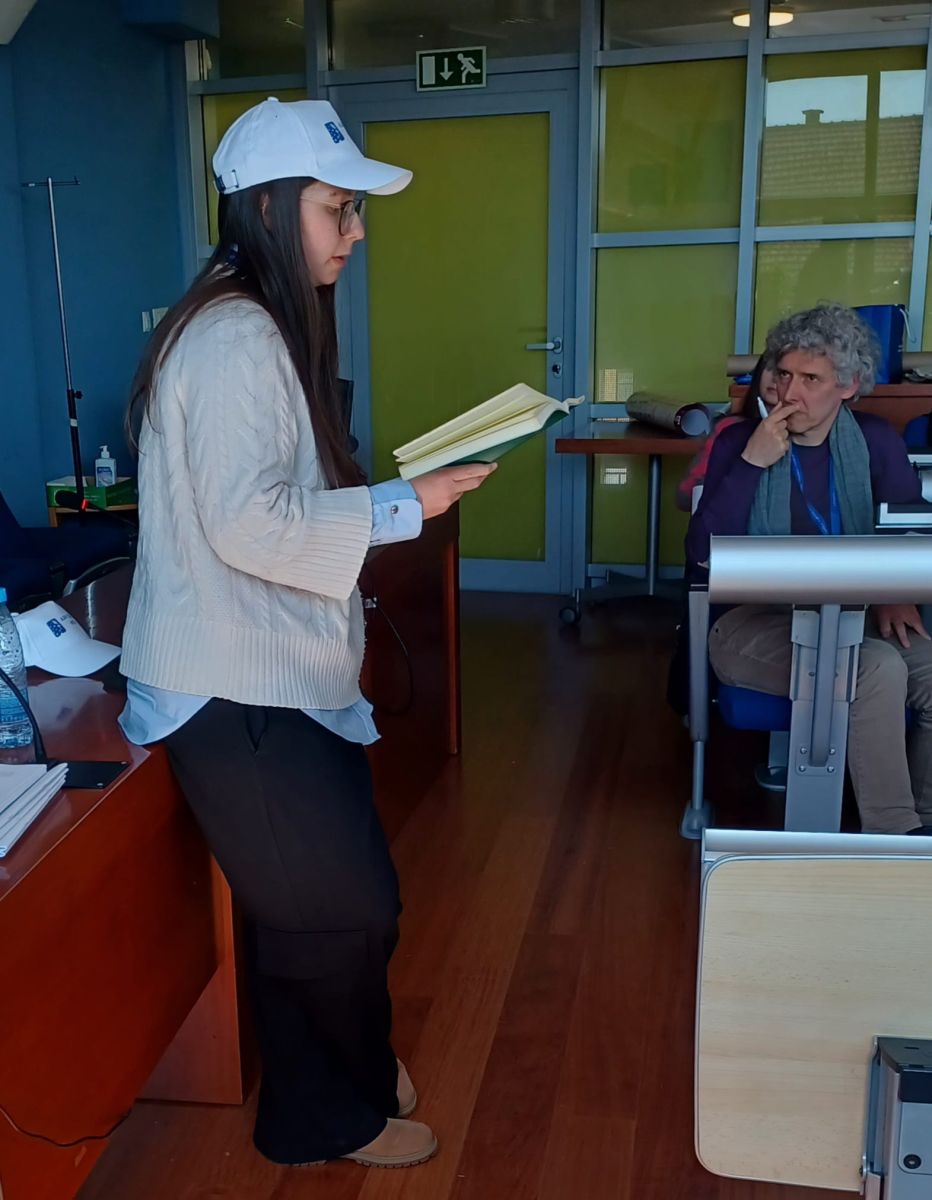
Thanks to Professor Charles Guérin, we found ourselves stepping into a class of Petrus Francius, a seventeenth-century professor who turned his students into actors. Francius used Cicero’s speeches to teach the practical skill of rhetorical performance. In his Eloquentia exterior (1697), he gives a series of rules for actio and pronuntiatio and then applies them to Cicero’s speeches including, of course, our Pro Archia. We were divided into groups and we worked on the text by reading and performing it according to Francius’ rules. For a while, we all became Petrus Francius’ students!
Thanks to Professor Lidewij van Gils, our transformation went even further: each of us became Archias. Divided into groups and equipped with caps bearing the words Archias sum, we reflected on our own experiences of exclusion and integration. When have you been a foreigner? What made you different? Who made you feel that you belonged? How did you integrate? These were the questions we answered by creating a short text. Together with my group, I helped write a brief poetic text in which the fear of feeling like a foreigner, and therefore different, was overcome by the awareness that we are all driven by the same thirst for knowledge. To share the outcome of our work, we decided to perform it in front of everyone. And that is how I found myself performing a text about displacement, culture and inclusion before the entire conference audience!
🇫🇷🇮🇹 A new collaboration between a French and an Italian high school
By Elisabetta Boano and Alice Hopfner
Cicero gave two classes from two European countries the opportunity to meet and work together on the concept of citizenship: Elisabetta Boano’s class, made up of fourth-year students from the Norberto Rosa Liceo (classical track) in Susa, near Turin, and Alice Hopfner’s students—16-year-old Latin students in their first year of high school—from the Lycée Edouard Schuré in Barr, a small town in Alsace (in eastern France). Their meetings took place via video conference and were conducted in English, which at times may have slowed the discussions down.
The first part of the session provided an opportunity for them to introduce themselves through epigraphic inscriptions from their respective regions. The pupils thus quickly outlined the ancient landscape of Piedmont and the Aosta Valley, as well as the Rhenish Limes, presented famous inscriptions from these regions (the inscription marking the incorporation of the Salassi into the city of Augusta Pretoria and the Alsatian funerary stelae) and, in doing so, described the status of the men and women of that era. They came to the joint conclusion that, in their respective regions as well as throughout the Roman world, the population was mixed, bearing names originating not only from Italy but also from Greece, Gaul and Germania, and which reflected frequent changes in status: some attained Roman citizenship by decree or emancipation. This initial observation served as an introduction to the Pro Archia and put the trial brought against Cicero’s client into perspective. The classes then had around two months to study the speech from the perspectives set out in their syllabuses.
The second meeting provided an opportunity to summarise this work and bring it into the contemporary world. The pupils chose an aspect of the trial that interested them in order to draw parallels with our own times: the Italian pupils presented their translation of §3, and they noted that, even in ancient times, discussing a migration case required a different kind of discourse – an epideictic rather than a judicial one – as is sometimes the case in Italy, where the subject of migration is rarely addressed in clear, scientific terms, but often through a form of propaganda. The French presented their translation of §12, in which Cicero lists all the benefits a poet brings to citizens and the Republic, and drew parallels with recent naturalisations of artists, sportspeople and individuals honoured for their courage.
These exchange programmes were particularly well received by the pupils (and their teachers too!): they brought a new dynamic to their lessons and enabled a genuine European dimension to be incorporated into a project that lent itself particularly well to this.
👩💻 Didactic experience with Cicero… between consuetudo and AI
By Tiziana Paracino and Rebecca Vittoria Ferrassa Urani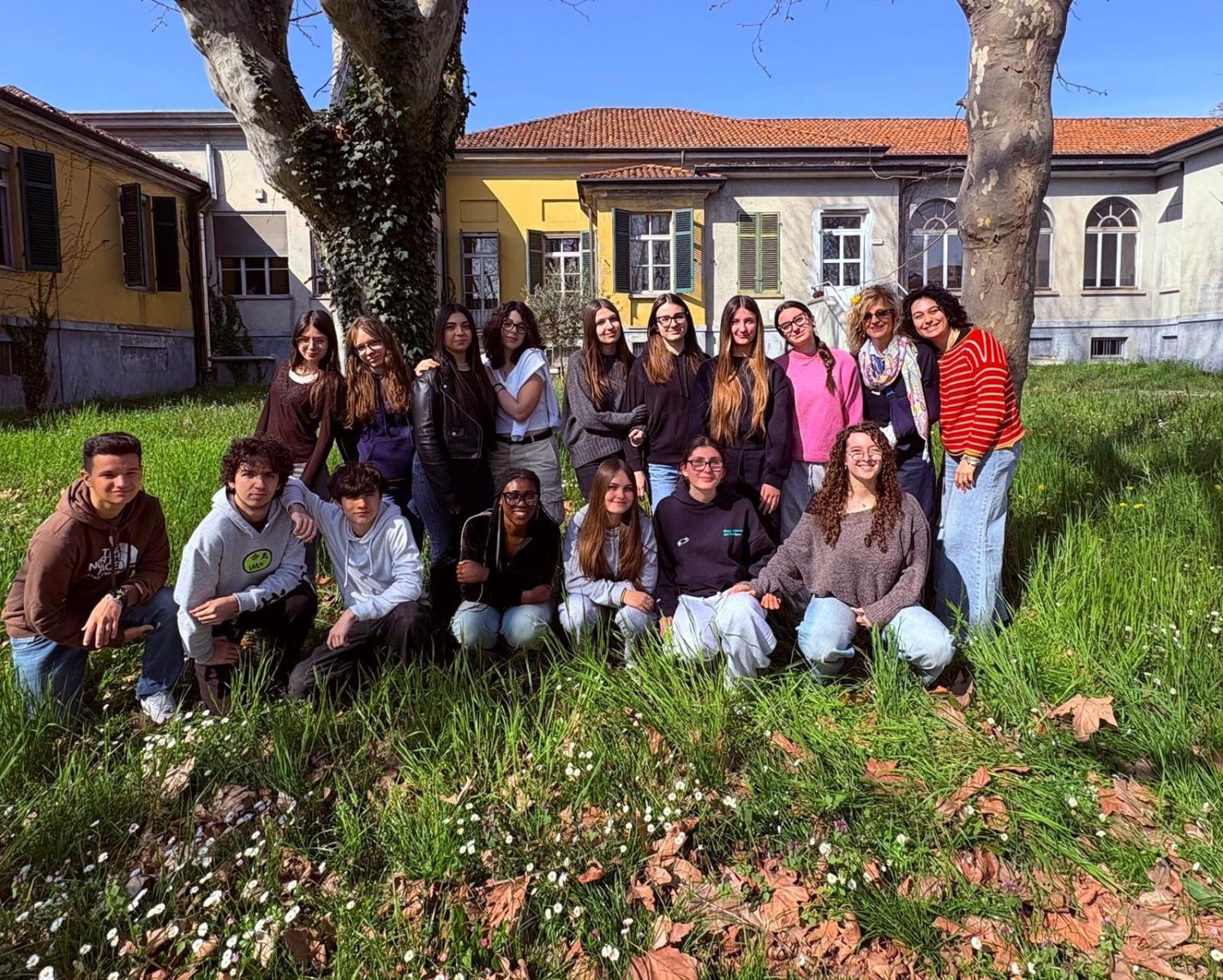
Here it is summarised the project of Class III A of the liceo delle Scienze Umane “Contessa Tornielli Bellini” in Novara that collaborated in the translation and the rhetorical and linguistic analysis of paragraph 9, argumentatio of the speech Pro Archia poeta, through group work. This was the subsequent step after the autonomous revision of the historical context, the participation in classes about Cicero’s figure and the Pro Archia’s Italian full reading.
Peer-to-peer dialogue and discussion were the principal ingredients of this educational experience during which groups had also the opportunity to query different artificial intelligence softwares (ChatGPT 5.2 Deep Search, M 365 Copilot, Claude-Sonnet 4.5, Haiku 4.5). Inspiring to §9, the experiment had the objectives to reproduce the tone of Cicero’s voice as he delivers his speech in the Senate, to create images showing firstly the certificate of Roman citizenship -with a comment on text transcription about grammar mistakes, not authentic modern artistic reconstructions and ornamental pseudo-Latin-, secondly Cicero and Archias as characters from Dante’s Divine Comedy and Panini football stickers -compared with a digital drawing by a student-, thirdly Archias today -considering hairstyle, outfit, accessories and bearing-. Then, we can’t forget the funny question to achieve a Lego’s proposal about the content of the paragraph studied.
The last “in progress” analysis concerns an Italian sonnet written in alternating rhyme describing the senators’ lament and a classical Roman-style trap song containing influences from Roman dialect, anglicisms and neologisms typical of the trap genre.
Finally, the class challenged itself performing the play’s script generated from M 365 Copilot: the performance’s video can be found at this link.
🏛️The National Classical High School Night in Gorizia
By Barbara Zlobec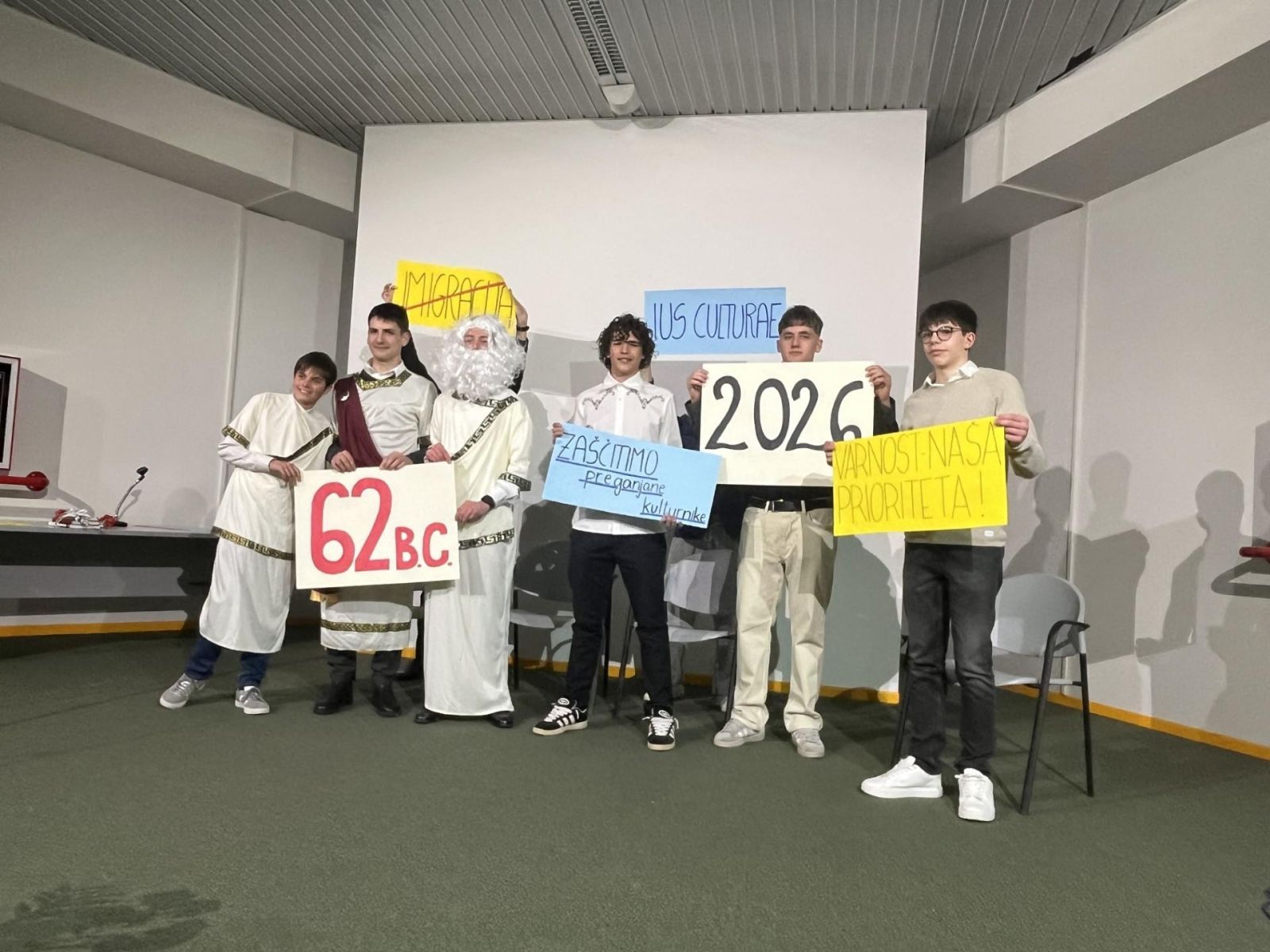
The National Classical High School Night (Notte nazionale del Liceo Classico) is an event involving hundreds of high schools across Italy, and in recent years also abroad. It offers public performances, theatre shows, readings and music to promote classical culture. Conceived by Prof. Rocco Schembra, it celebrates the relevance of classical studies today. This year marked its twelfth edition, with the common theme across all participating schools being the concept of humanitas. The Primož Trubar High School in Gorizia (Italy) also took part in the Notte nazionale del Liceo Classico on Friday, 27 March 2026. This is a border school with Slovene as the teaching language. Its student body includes members of the Slovenian minority, Slovenian pupils from the nearby town of Nova Gorica, and Italian pupils whose parents have chosen to raise them in a bilingual environment.
Openness to diversity, the pursuit of collaboration and the building of a future without borders are key goals of the school, closely alignes with the teme of humanitas. During the evening, entitled Homo sum, civis sum, numerous engaging activities took place: a workshop on antique costume jewellery, a discussion with Dr. Andrea Bellavite, author of Gorizia and Nova Gorica. Two Cities in One (a guide to the European Capital of Culture); a dialogue with student representatives from the Slovenian linguistic minority in Carinthia, exploring the theme of humanitas as a means of preserving one’s mother tongue and culture; readings of poems written among the ruins of Gaza; participation in the Festival Européen Latin Grec (FELG) with a reading from Longus the participation in the Interreg-Italy-Slovenia Students 4 Cooperation competition with the BRIDGES project - (Building Regional Integration and Development through Governance and Exchange of Solutions).
Particular attention was given to the Europa Ciceroniana project, which addresses the theme of citizenship through an analysis of Cicero's Pro Archia, in which the issues of civic status, the value of culture and intercultural dialogue are interwoven. During the school year, Year 4 pupils partially translated this text, and with the support of their teachers and in collaboration with Year 1 and Year 3 pupils, they presented to the audience the story of the poet Archias, along with a short theatrical performance highlighting the parallels between the difficulties faced by Archias in the first century BC and those faced by migrant writers today. Once again, through the exploration of the value of the human being in both ancient and contemporary texts, we were united by the conviction that it is vital to keep our humanitas alive.
🇩🇪 A new entry in the German group
By Kilian Schräder.png)
My name is Kilian Schräder and I am 24 years old. I study Classics and History at Trier University. Since the beginning of my studies in Trier I have had a particular interest in Cicero’s works — Initially I approached them from a historical perspective, while over time my research focus shifted towards a narratological approach. I particularly enjoy exploring how much we can still learn from Cicero’s rhetorical and narrative techniques to enhance our modern understanding of persuasive and engaging texts and speeches.
I’m thrilled to be working as a student assistant to Prof. Dr. Stephan Busch, and to be a part of this exciting international project!